Origins, Memory, and Continuity
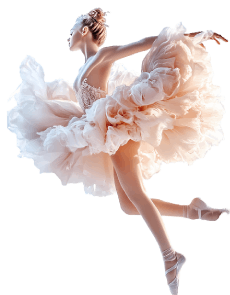
Dance is one of the oldest ways humans have made sense of the world together. Across societies, movement has been used to mark transitions, share stories, and connect individual experience to something larger. These early functions still echo through contemporary dance practices, even when the context looks entirely modern.
Rather than existing as a fixed tradition, dance survives by adapting. Each generation inherits forms, rhythms, and gestures, then reshapes them to reflect new realities. Continuity in dance does not mean repetition, but ongoing interpretation grounded in shared memory. What persists is not exact choreography, but purpose: connection, expression, and collective meaning.
Dance as Ritual and Marking Time
In many cultures, dance accompanies rites of passage such as births, coming-of-age ceremonies, weddings, and funerals. Movement becomes a way to publicly acknowledge change, helping individuals and communities process transitions together. These dances often follow recognizable patterns, reinforcing a sense of continuity across generations.
Ritual dance also provides structure during moments of uncertainty. By repeating familiar movements, communities create stability when life changes feel overwhelming. Even when belief systems shift or rituals lose formal religious meaning, the act of moving together continues to serve a grounding function.
Even when ritual contexts fade, their influence remains visible. Modern celebrations, club scenes, and social dances still echo the idea that movement can mark time, release tension, and create shared emotional space. The setting may change, but the human need to embody transition does not.
Embodied Memory and Oral Tradition
Before written records, dance served as a way to store and transmit knowledge. Steps, rhythms, and formations encoded stories about history, environment, and social roles. The body became an archive, holding information that could be passed on through practice rather than text.
This embodied memory differs from written history because it lives in repetition. Knowledge survives only if it is practiced, corrected, and adapted. As a result, dance traditions are inherently social, requiring interaction between generations to remain alive.
This embodied memory remains central to many dance forms today. Learning through observation and repetition builds a connection between teacher and student that goes beyond instruction, preserving nuance and cultural context. Small details, such as timing or posture, carry meaning that cannot be fully explained in words.
Adaptation Without Loss
Dance traditions rarely survive by resisting change. Instead, they absorb influences, reinterpret symbols, and respond to new social conditions. This flexibility allows dance to remain relevant without losing its core meanings.
Adaptation can take many forms: changes in music, performance spaces, social norms, or participation. What appears from the outside as departure is often an internal process of adjustment that keeps the practice meaningful for those involved.
What appears as innovation is often continuity in disguise. New music, spaces, or audiences shift how dance looks, but the underlying purpose of shared expression stays intact. In this way, dance resists stagnation not by preservation, but by motion.
Dance and the Meaning of Place
Where dance happens shapes how it is performed and understood. Geography, climate, architecture, and social norms all leave traces in movement styles. From open village squares to crowded urban rooms, space influences rhythm, posture, and interaction.
Dance also reflects how people relate to their surroundings. The body responds instinctively to terrain, sound, and proximity to others. Over time, these responses become codified into recognizable styles linked to particular places.
As people move across regions and borders, dances travel with them. These movements create hybrid forms that reflect layered identities, blending local traditions with new environments. Place, in this sense, is not static, but continuously redefined through movement.
Landscape, Rhythm, and Environment
Natural surroundings often shape the physical qualities of dance. Grounded steps may reflect agricultural labor, while light, elevated movements can mirror ceremonial dress or seasonal rhythms. Music and movement evolve together in response to daily life.
Environmental factors influence not only how people move, but why they move. Dance can reflect cycles of work and rest, seasonal celebrations, or collective responses to climate and terrain. These influences are often subtle but deeply embedded.
Even small environmental details matter. Floor surfaces, footwear, and climate all affect how dancers move, reinforcing the connection between body and place. Over time, these adaptations become stylistic markers rather than practical choices.
Urban Spaces and Informal Stages
Cities introduce new dynamics to dance culture. Limited space, diverse populations, and fast-paced social change encourage improvisation and experimentation. Streets, clubs, and community centers become informal stages where styles meet and transform.
Urban dance often emerges from everyday social interaction rather than formal institutions. Movement responds to music played in public spaces, social gatherings, or informal competitions, creating forms that are immediate and responsive.
Urban dance scenes often thrive on accessibility. Participation matters more than formal training, allowing dance to function as a shared language across backgrounds. This openness helps sustain dance as a social practice rather than an exclusive art form.
Migration and Cultural Exchange
When people migrate, they carry dance with them as a marker of identity. In new settings, traditional forms adapt to different audiences and influences, creating variations that reflect both origin and destination.
Migration often accelerates innovation. Dancers negotiate between preserving familiar movements and responding to new cultural contexts, producing hybrid forms that speak to complex identities.
These exchanges challenge ideas of authenticity as fixed. Dance remains authentic not by staying unchanged, but by continuing to serve the communities who practice it. Authenticity becomes relational rather than historical.
Community, Participation, and Shared Meaning
Dance becomes cultural through participation. Whether danced by many or witnessed by a few, its meaning emerges from collective engagement rather than individual display. Communities define what counts as skill, respect, and expression through shared norms.
This social dimension explains why dance persists outside formal institutions. It belongs as much to everyday life as to organized events. Dance thrives in kitchens, streets, celebrations, and informal gatherings because it responds directly to social needs.
- Dance creates belonging by offering a shared physical experience.
- Participation often matters more than technical precision.
- Informal learning strengthens social bonds.
- Group movement reinforces mutual awareness and trust.
Dance as Social Commentary and Change
Dance never exists in a vacuum: it is responsible toward power, identity, and sometimes, conflict occasionally somewhat or in a more penetrating manner. In its dance actions, movement may express resistance, affirmation, or critique without resorting to words.
Dance, because it is embodiment, has this to the effect of putting life into game: the political pressures, such a pointer to inequalities and hand in any hint of what kind of cultural engagement it makes with the forms of gravity entering non-materialization were inscribed in the sound of dance.
Dance functions as a reflective mirror of the values of societies as it reflects contemporary ideologies. Most of the time new dance styles come out when the traditional ones are seen as not performing goediger much in saturation of life-world. One might see such instances of change as the practice operating contructively via dance.
Movement and Political Expression
Throughout history, dance has been used to assert identity and challenge authority. Marginalized communities have often turned to movement as a visible, embodied form of presence when other forms of expression were restricted.
Dance can communicate collective emotion, from anger to hope, without formal messaging. Its impact lies in visibility and participation rather than persuasion.
These dances carry layered meanings. What looks like entertainment may also communicate solidarity, defiance, or survival. Context determines interpretation, making dance a flexible tool for social expression.
Technology and the Circulation of Dance
Digital platforms have transformed how dance spreads and evolves. Short videos, tutorials, and global visibility accelerate the exchange of styles, allowing movements to travel faster than ever before.
This rapid circulation creates new dynamics. Dances can gain global recognition while losing local context, raising questions about interpretation and ownership.
At the same time, technology reinforces dance’s adaptability. It enables documentation, learning, and connection across distance, proving that dance can thrive in changing media environments without losing its embodied core.
Global Influence Without Uniformity
Global exposure does not erase local difference. Instead, it often highlights contrast, encouraging communities to emphasize what makes their dance distinct. Global and local influences coexist, shaping forms that are both connected and specific.
Rather than flattening culture, global exchange often multiplies variation. Dancers adapt what they encounter, filtering influences through local values and experiences.
Dance remains rooted because it is practiced by bodies in real places, shaped by real relationships. No matter how widely a dance travels, it is always grounded somewhere.
Why Dance Endures
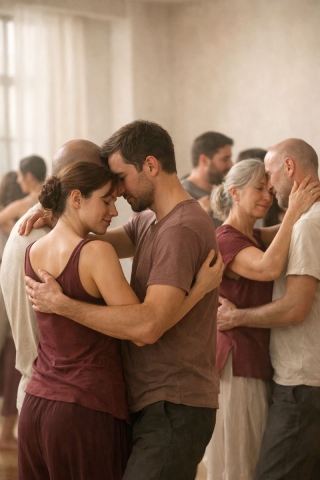
Dance is sustained because it fulfills basic human needs. It allows people to feel seen, to have a sense of belonging, and to work out their emotions through the body. These functions remain significant regardless of historical eras or cultures.
Unlike many cultural forms that require literacy, technology, and material resources, dance requires none of those. This is why it has the farthest-reaching and most profound arching throughout societies and historical epochs.
As long as people move together, dance will continue to evolve-for its sustainability is birthed not out of preservation but a constant coming and going as concerned bodies come together to dance.
Embodiment Beyond Language
Dance communicates what words cannot. It gives form to joy, grief, tension, and release in ways that feel immediate and shared. This embodied communication builds empathy without explanation.
Because it bypasses language, dance connects people across cultural and linguistic boundaries. Movement becomes a common ground where meaning is felt rather than translated.
Identity, Play, and Expression
Through dance, individuals explore who they are in relation to others. It offers space for experimentation, play, and self-definition within a social frame.
Playfulness is central to dance’s appeal. It allows people to test boundaries, shift roles, and imagine alternatives, reinforcing dance as both expressive and social.
This balance between freedom and structure keeps dance meaningful. It allows personal expression while reinforcing collective norms.
The Future of a Living Practice
Dance will continue to change as societies do. New technologies, spaces, and social questions will shape how people move together. What remains constant is dance’s role as a living cultural practice.
Future forms may look unfamiliar, but their foundations will remain the same. Dance will continue to respond to human need, not institutional definition.
Rather than fading, dance adapts. Its future depends on participation, not preservation.
A Culture That Moves With Us
Dance endures as it belongs to all and carries the past without being imprisoned by it, embracing an ever-new meaning. In a living crescendo, dance teaches that movement is more than what happens on the watching end of the spectrum but rather what both nurtures and transmutes from within.
Pointing at some fundamental dimensionless essence of life, leap dancing dragged dance through dance and space, to offer an entity that grants a bond and a genre for revelation and the making of person, in time.