Storytelling Before Writing
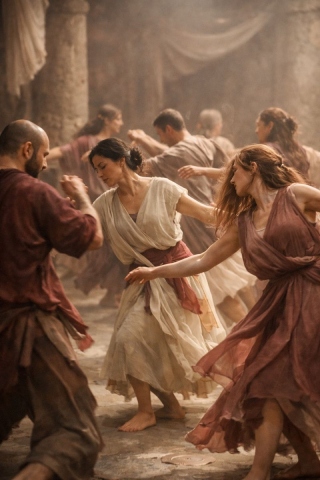
For much of human history, storytelling existed without books, scripts, or permanent records. Communities relied on sound and movement to pass knowledge between generations, using bodies as vessels of memory. Dance and music became systems for remembering events, beliefs, and social values in ways that could survive without written language.
These forms of storytelling were not abstract or symbolic in isolation. They were embedded in daily life, ritual, work, and social gathering. Stories were learned by doing rather than listening, ensuring that memory remained active and shared rather than stored externally.
Because participation was central, storytelling became a collective responsibility. Knowledge did not belong to a single narrator, but to the group as a whole, reinforcing social bonds while preserving continuity.
Movement as Narrative Structure
In dance-based storytelling, movement replaces plot in the conventional sense. Gestures, spatial patterns, posture, and timing communicate relationships, conflict, and transformation. A repeated step may signal continuity or tradition, while sudden changes in rhythm, direction, or intensity can mark disruption, tension, or resolution.
Narrative meaning emerges through contrast and sequence rather than explanation. Viewers and participants interpret stories by recognizing emotional shifts, symbolic patterns, and changes in energy rather than following spoken dialogue or narration.
This structure allows stories to remain open rather than fixed. Interpretation varies depending on context, audience, and lived experience, giving dance-based narratives a flexibility that written stories often lack.
Music as Memory and Timekeeper
Music provides the temporal framework that allows dance narratives to unfold. Rhythm organizes movement into phrases, creating anticipation, recall, and repetition. Melodic patterns help anchor stories in memory, allowing them to be transmitted reliably across time without written notation.
In many cultures, specific rhythms, scales, or musical modes are associated with particular stories, ceremonies, or emotional states. Hearing the music alone can evoke the narrative, even without movement, because memory is stored in sound as well as action.
Music also regulates collective participation. It synchronizes bodies, aligning individual movement into shared experience, which strengthens both memory and social cohesion.
Collective Participation and Shared Recall
Storytelling through dance and music is often communal rather than individual. Participation reinforces memory, as bodies learn stories by moving through them together. This shared recall distributes knowledge across the group rather than concentrating it in a single storyteller or authority.
Because the story lives in collective practice, it remains resilient. Even if individual details shift or fade, the core narrative survives through repetition, rhythm, and shared understanding. Memory is renewed each time the dance or song is performed.
This collective ownership ensures that storytelling remains adaptable. Stories evolve with the community rather than becoming static representations of the past.
Myth, Legend, and Symbolic Expression
Dance and music have long been used to convey myths and legends that explain origins, values, and natural forces. These stories are rarely literal or descriptive. Instead, they rely on symbolic movement, rhythm, and sound to suggest meaning rather than state it directly.
Embodied Myth and Transformation
Myths often involve transformation, journeys, or encounters with forces beyond the human. Dance expresses these ideas through shifts in posture, energy, rhythm, and spatial use. A dancer’s body can transition between characters, beings, or emotional states without verbal cues.
These transformations are felt viscerally. The audience recognizes change not because it is explained, but because it is embodied through movement quality and physical presence. The body becomes a narrative medium rather than a representational tool.
Through embodiment, myth becomes lived experience rather than distant story, reinforcing its cultural power.
Gesture as Symbolic Language
Many dance traditions use codified gestures to represent ideas, actions, or characters. Hands, eyes, facial expression, and body orientation function as symbolic language, allowing stories to be told with clarity even without words.
Over time, communities learn to read these gestures intuitively. Meaning becomes embedded in the movement itself rather than explained externally. This shared visual language strengthens cultural continuity and reinforces collective understanding.
Gesture-based storytelling also allows subtle variation. A small change in emphasis can alter meaning without breaking the narrative framework.
Sound as Atmosphere and Meaning
Music shapes the emotional environment in which mythic stories unfold. Percussion may signal power, danger, or urgency, while sustained tones create space for reflection, mourning, or reverence. Sound does not merely accompany movement. It frames interpretation and emotional response.
Together, music and dance create layered narratives where rhythm, melody, and movement reinforce one another. Meaning emerges from their interaction rather than from any single element.
Emotion as Story
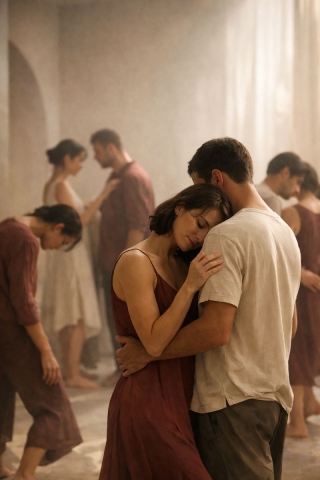
There are stories in dance and music that do not speak of characters, incidents, or mythic structures, emphasizing the emotional states over narrative arcs. The story is only pain, grief, longing, pressure, release, etc.
This is a type of storytelling that gives the community a platform, which allows for shared experiences that escape the realm of language. It becomes a consensus way of putting into words those things which are really hard and almost impossible to articulate.
Expressing Inner Experience
Dance gives form to internal states through movement quality, tempo, weight, and spatial relationship. Subtle changes in posture or timing can communicate emotional shifts without naming them.
Music amplifies this process by shaping emotional flow. Changes in rhythm, harmony, or intensity mirror emotional progression, guiding both dancer and audience through shared experience rather than explanation.
This emotional storytelling prioritizes sensation over interpretation, making it immediately accessible.
Communal Emotion and Social Bonding
When emotions are expressed collectively through dance and music, they become social rather than private. Grief rituals, celebratory dances, and communal songs allow groups to process emotion together rather than in isolation.
This shared emotional storytelling strengthens social bonds. Participants recognize their own feelings reflected in others, creating empathy, trust, and cohesion. Emotion becomes a unifying force rather than an individual burden.
Repetition and Emotional Memory
Repeated dances and songs reinforce emotional memory. Returning to familiar rhythms during significant moments creates continuity between past and present experience.
Over time, the emotion associated with a dance or musical form becomes inseparable from the form itself. Movement and sound become emotional archives, capable of evoking feeling long after the original context has passed.
Historical Events Told Through Rhythm and Movement
Often, dance and music were used to record historical incidents when access to writing was obscured, protecting only privileged ones. By moves and song, major battles, migrations, alliances, tribulations, and ultimate survival were recalled.
The narration of the history lies chiefly upon the collective experience before the specific chronology. It is the integrated shared meanings that are of importance, and the emotional truths.
Commemorative Movement
Commemorative dances mark events that shape collective identity. Movement sequences may reference struggle, endurance, or triumph through symbolic action rather than literal depiction.
By repeating these dances, communities keep historical memory active. The past remains present in bodily experience, ensuring that history is remembered not only intellectually, but physically.
Adaptation and Selective Memory
As stories are passed down through dance and music, they adapt to new contexts. Certain elements are emphasized, simplified, or softened depending on contemporary needs.
This selective memory does not erase history. Instead, it reframes it, allowing stories to remain meaningful and relevant without losing their core message.
Resistance and Survival Through Story
In situations where history was suppressed, distorted, or erased, dance and music became tools of resistance. Stories carried through movement preserved perspectives that might otherwise have been lost.
These embodied narratives allowed communities to maintain identity, dignity, and continuity despite external pressure, ensuring survival through shared expression.
The Relationship Between Music and Movement
Dance and music are deeply interdependent in storytelling. Rhythm shapes movement, while movement gives rhythm visual and emotional presence. Together, they create narrative coherence without words.
This relationship allows stories to cross linguistic and cultural boundaries, making dance and music powerful tools of shared human communication.
Rhythm as Narrative Pulse
Rhythm determines pacing, tension, and release. Fast tempos may signal urgency, conflict, or excitement, while slower rhythms allow reflection, transition, or resolution.
Changes in rhythm guide narrative shifts, functioning much like chapters or turning points in written stories.
Improvisation and Responsive Storytelling
Many dance and music traditions allow improvisation within structured frameworks. This flexibility enables performers to respond to context, audience energy, or emotional atmosphere in real time.
Improvisation keeps storytelling alive. It ensures that narratives remain responsive rather than fixed, allowing each performance to reflect present circumstances.
Silence, Pause, and Absence
Silence and stillness are as important as sound and movement. Pauses create space for meaning, allowing anticipation, reflection, or emotional weight to surface.
In storytelling, absence can be as powerful as action. Stillness may signal loss, transition, or completion, reminding audiences that meaning often resides between moments.
Passing Stories Between Generations
Dance and music are powerful tools for intergenerational storytelling. Children learn stories not by reading them, but by moving alongside elders, absorbing narrative through shared practice.
This mode of transmission embeds knowledge in the body, making stories durable, flexible, and deeply personal.
Learning Through Participation
Stories told through dance and music are learned by doing. Participation reinforces memory and understanding, ensuring that narratives are retained even as details evolve.
Learning becomes relational, strengthening ties between generations and reinforcing cultural continuity.
Variation Without Loss
As stories pass between generations, variation is inevitable. Movements shift, rhythms change, and interpretations evolve.
Rather than weakening narrative, this variation keeps stories relevant, allowing them to reflect current experience while preserving core meaning.
Continuity in Change
The survival of dance and music storytelling depends on their ability to change. Continuity lies in purpose, not precision.
Stories endure because they remain useful, meaningful, and shared.
A Living Narrative Tradition
Dance and music are not things of the past meant only for storytelling. They continue to be part of the art of living that communities embrace to remember their past, to articulate expression, and most importantly, to bond with each other. The stories are carried forward using movements, rhythms, and participatory sharing, all in keeping with an oral tradition where no one really writes a written language.
Seeing dance and music as a narrative system, we uphold the truth that storytelling is not an activity confined to words or sound; it is the harmony and sync of human movements in space and time.