Dance as a Social Practice, Not Just Movement
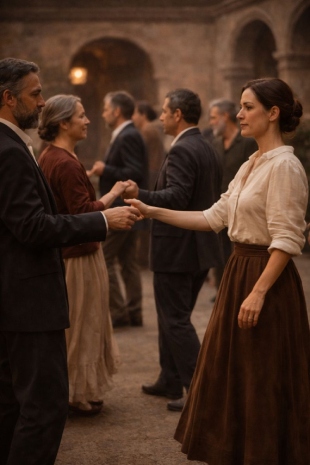
Dance invariably resides within social frameworks. It materializes in particular circumstances, nurtures specific rules, and thus facilitates the expectations projected on the behavior. These expectations influence how to move, to interact, and to present oneself by the dancers. Costume and etiquette elements are not there to merely beautify, it constructs the very matrix where dance materializes into a realm for the social act.
In many traditions, the want of an impeccable appearance and comportment is as significant as professional dancing. Costume, stance, and good behavior in the end, signify belongingness, consciousness, and respect. This informs whether a dancer is knowledgeable about the values of the community and the function of the dance. Without this pulse of shared comprehension, actions and movements can quickly divest themselves of their intended meanings.
Movement Shaped by Social Context
The way people move in dance reflects broader social norms. Some traditions emphasize restraint, precision, and control, while others encourage expansiveness, improvisation, and physical closeness. These differences are not arbitrary. They reflect cultural ideas about modesty, hierarchy, gender roles, intimacy, and public behavior.
Movement that feels expressive and appropriate in one context may feel excessive or disrespectful in another. Etiquette provides a framework that helps dancers navigate these differences. It guides how energy is used, how space is shared, and how movement aligns with shared values rather than individual preference.
The Body as a Social Signal
Posture, gaze, and gesture communicate meaning beyond choreography. An upright stance may signal respect, discipline, or formality, while a relaxed posture can indicate ease, familiarity, or intimacy. Where dancers look, how they hold their hands, and how close they stand to others all convey social information.
These signals help audiences and fellow dancers interpret intention. They clarify whether a dance is celebratory, ceremonial, flirtatious, meditative, or reverent. In this way, the body becomes a social text, readable to those who understand its codes.
Learning Through Observation and Participation
In many dance cultures, etiquette and movement are learned together through observation rather than formal instruction. New participants watch how experienced dancers dress, stand, and behave, absorbing expectations alongside physical steps.
This learning process reinforces the idea that dance knowledge is social knowledge. Knowing how to move correctly includes knowing when to move, how to enter or leave a dance space, how to acknowledge others, and how to respond to mistakes or variation. Dance is learned by being present within a community, not by memorizing steps in isolation.
The Role of Costume in Shaping Movement
Costume holds a direct and often underestimated impact on how dance is performed. Clothing will restrict or enable movement, influence posture and balance, and create visual rhythm. Over time, the motion of dance may develop as a reaction to costume, providing an immediate relationship between costume and choreography. Costume has symbolic connotations, transmitting information on identity, status, role, and occasion that will further frame perception of movement by participants and observers.
Physical Constraints and Possibilities
Heavy garments, layered fabrics, or fitted clothing naturally limit range of motion, encouraging grounded, controlled movement. Lighter or looser clothing allows for greater speed, extension, and fluidity. Footwear affects balance, footwork, and tempo, influencing how weight is distributed and how steps are executed.
Rather than hindering dance, these constraints shape its character. Movements evolve to work with clothing, creating styles that feel intentional and coherent. What might appear restrictive becomes expressive through adaptation.
Posture and Silhouette
Many dance costumes are designed to emphasize specific body lines or postural ideals. Structured garments encourage upright posture and contained movement, while flowing fabrics highlight turns, spins, and arm gestures.
The resulting silhouette becomes part of the dance’s visual language. Audiences learn to read movement through costume, interpreting meaning through shape and form as much as motion. The costume does not merely cover the body. It completes the movement.
Costume as Cultural Marker
What dancers wear signals cultural belonging and historical continuity. Colors, materials, patterns, and adornments often reference regional identity, social role, or ceremonial purpose. These details situate the dance within a specific cultural narrative.
Removing or altering costume can significantly change how a dance is perceived. Without its visual markers, movement may lose context, making it harder to understand the values or history it represents.
Etiquette as an Invisible Framework
Etiquette governs how dance is approached, entered, and shared. It includes rules about who may dance, with whom, where, and under what conditions. While often unspoken, these rules shape the experience of dance as much as choreography itself.
Understanding etiquette is essential for respecting dance traditions and participating appropriately. It protects meaning, relationships, and shared space.
Rules of Participation
In many traditions, participation in dance is guided by age, gender, status, or social role. Some dances are reserved for specific groups, while others are open to broad participation. Invitations, pairings, and positioning often follow established norms.
These rules reflect broader social structures. They help maintain order, meaning, and balance within the dance context, ensuring that participation aligns with communal expectations.
Behavior Within the Dance Space
Etiquette defines how dancers behave once movement begins. This includes how close dancers stand, how they acknowledge partners or the group, how they respond to mistakes, and how improvisation is handled.
Respectful behavior ensures that dance remains a shared experience rather than a competitive or disruptive one. It also helps participants feel safe and understood, reinforcing trust within the group.
Entering and Exiting the Dance
How dancers enter or leave a dance space can carry symbolic importance. Bowing, waiting for invitation, or following a specific order reflects respect for tradition and fellow participants.
These actions frame the dance, marking its beginning and end. They signal that the dance is not casual movement, but a meaningful social act.
Gesture, Posture, and Meaning
There is an academic compromise in our present thoughts on gesture and posture within a theatrical context, which is why it is vital to focus on their history. Gesture and posture are the result of society, costuming, etiquette, and movement, and, in performing arts jargon, they are understood to express tension and atmosphere.
Codified Gestures
Many dance traditions use gestures with specific, recognized meanings. These gestures may reference actions, emotions, or symbolic ideas understood within the culture.
Because these gestures are codified, performing them incorrectly can alter or obscure meaning. Learning gesture is therefore inseparable from learning cultural context and intention.
Posture as Moral and Social Signal
Posture often reflects cultural ideals of behavior and character. Upright posture may signal discipline, reverence, or self-control, while grounded stance can express strength, stability, or connection to the earth.
These postural norms influence how movement is executed and interpreted. They shape the overall tone of the dance and guide how energy is contained or released.
Restraint and Expression
Not all dances value maximal expression. In some traditions, restraint is a sign of refinement and respect. Movement may be deliberately contained, with emphasis on precision, timing, and control rather than amplitude.
Understanding this balance prevents misinterpretation. It helps preserve the intended character of the dance and avoids imposing external expectations of expressiveness.
Historical Context and Changing Norms
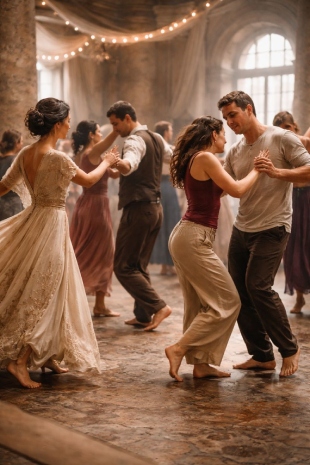
Costume, etiquette, and movement evolve over time. Changes in social structure, technology, and cultural exchange influence how dances are performed and understood. What feels traditional today may itself be the result of adaptation.
Historical awareness helps explain why certain rules exist and how they have shifted across generations.
From Court to Community
Some dances originated in formal settings with strict etiquette and elaborate costume, later becoming more accessible as they spread into broader society. As these dances moved into new contexts, rules softened while core elements remained.
This layering creates traditions that reflect multiple historical periods at once, combining formality with communal participation.
Modern Adaptations and Tensions
Contemporary performances often adapt traditional dances for new audiences or stages. This can involve simplifying costume, altering movement, or relaxing etiquette to improve accessibility or visibility.
While adaptation can support survival, it also raises questions about what is lost or changed when context shifts. Balancing accessibility with respect remains an ongoing challenge.
Global Sharing and Responsibility
As dances travel globally, performers encounter traditions outside their own cultural background. In these situations, understanding costume and etiquette becomes especially important.
Respectful engagement requires learning not only movements, but the social and historical meanings that shape them. Without this effort, dances risk being reduced to surface-level imitation.
Why These Elements Cannot Be Separated
Costume, etiquette, and movement together form an interrelated and significant system. If I remove one, I alter the impact of its counterpart. Movement above an unwrapped condition can remove the beauty of the dictator, while movement without etiquette loses its factor of social ambiguity. Thus, their conjunction results in the maintenance of the intelligent visibility of dance in its socio-cultural world.
Preserving Meaning Through Context
Maintaining the relationship between clothing, behavior, and movement helps preserve the meaning of dance traditions. It allows dances to communicate their original intent even as they adapt to new settings.
Context does not require rigidity, but awareness. Knowing why things are done matters as much as knowing how.
Learning Dance as Cultural Practice
Approaching dance as a cultural practice rather than a technical skill encourages deeper understanding. It invites learners to consider how their bodies, clothing, and behavior interact within a shared space.
This perspective fosters respect and reduces misinterpretation or superficial imitation.
Dance as Embodied Social Knowledge
Ultimately, dance carries social knowledge in embodied form. Costume shapes the body, etiquette shapes interaction, and movement expresses shared values.
Together, they create dances that are not only performed, but lived.
Understanding Dance Through Its Details
Another name of dance is a painstaking attention to the details of costume, manners, and gestures, imbued with a profound social and historical connotation. These details therefore influence and account for the appearance and feeling of dances in ceremony and respect of context.
A deeper understanding of dance as a cultural form becomes possible by recognizing how dressing, behavior, and socially significant postures give movements shape. Every step carries meaning-not mere motion. Such meaning is really a shared knowledge forged by time, place, and community.