Dance, History, and Social Structure
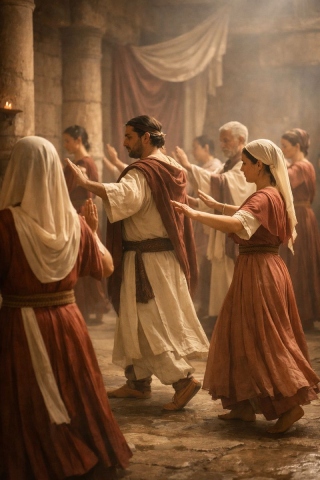
Traditional dances do not just exist in the universe buf. Instead, they are really shaped right by the specific social structures, belief systems, and economic constraints particular to cultures originating them. Their forms may include dance patterns that express the hierarchy, status, gender roles, religion culture, and collective experience that were central to the culture at the time of the concentrated act of dance-making. To put it in another way, why did some people dance, when they danced, and whom did they danced for, all carried implications overflowing the movements themselves.
Studying dance history means that we flip through the pages of time just like searching for a brooch under the bed that slipped from the clutches of our grandmother's hand that rainy afternoon.... Barely any real fashion to the study were the steps, costumes, and music that came out of the above conditions. So the dance was the social language, which upheld the order while allowing emotional and symbolic expression within its own structure. Through dance, and from the dance, societies began to reflect on their world views and how they saw themselves in the world.
Ritual Origins and Sacred Contexts
Many historical dance traditions began as ritual acts rather than performances meant for observation. Movement was used to communicate with spiritual forces, honor ancestors, seek protection, or mark seasonal cycles tied to agriculture, weather, and survival. These dances were often inseparable from music, costume, spoken word, and ceremonial space, forming a unified expression of belief.
Ritual dances followed strict structures, with specific gestures, directions, and rhythms carrying symbolic meaning understood by the community. Precision mattered not for visual polish, but for spiritual effectiveness and collective participation. Over time, even when belief systems shifted or sacred meanings faded, these ritual foundations continued to shape movement vocabulary and performance conventions.
Hierarchy, Role, and Collective Order
In societies with strong social hierarchies, dance often mirrored those structures. Court dances emphasized symmetry, restraint, and controlled movement that reflected political authority and social order. Who was allowed to dance, where they stood, and how they moved could signal rank, age, gender, or occupation.
At the same time, communal dances allowed collective participation within clearly defined roles. These dances reinforced belonging while maintaining social boundaries, creating a shared physical expression of cooperation and mutual responsibility. Through repetition, participants learned not only movement but their place within the group.
Labor, Environment, and Daily Life
Many traditional dances grew directly from work and environment. Repetitive movements tied to farming, fishing, hunting, or craftsmanship became stylized into dance forms that honored labor as a collective effort. Rhythm helped coordinate bodies, sustain endurance, and reinforce shared timing, later evolving into symbolic and celebratory expression.
Environmental conditions also shaped movement. Climate, terrain, and available space influenced posture, footwork, tempo, and energy. Over time, geography became embedded in dance itself, making movement a physical reflection of place as well as culture.
Preservation Through Transmission
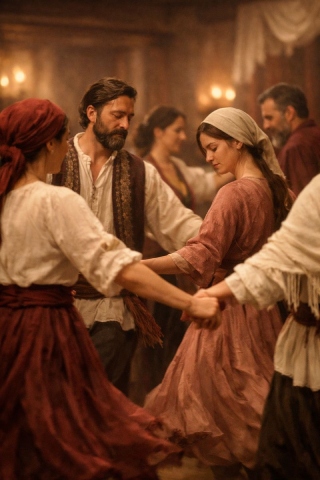
Historical dance traditions survive not through written records, but through embodied transmission. Knowledge is passed from body to body, generation to generation, often within families or close-knit communities. This mode of preservation makes dance both resilient and fragile, dependent on continued practice rather than documentation alone.
Transmission depends on participation. When social structures change or communities are disrupted, dances can shift, fragment, or disappear unless actively practiced and valued. Survival relies on people choosing to keep moving together.
Oral Teaching and Embodied Knowledge
Traditional dance learning relies heavily on observation, imitation, and repetition. Rather than verbal explanation, students absorb timing, weight, posture, and expression by dancing alongside more experienced members. This process preserves nuance that cannot be fully captured through notation or description.
Embodied teaching also reinforces relationships. Learning dance becomes a social act, strengthening bonds between generations and embedding cultural values within the body itself. Knowledge is carried not only as information, but as lived experience.
Family, Community, and Informal Instruction
In many cultures, dance knowledge is not separated from daily life. Children learn by watching elders during celebrations, ceremonies, and communal gatherings. Instruction happens informally, woven into social interaction rather than structured lessons or institutions.
This form of learning allows flexibility. Dances evolve naturally as each generation adds subtle changes, ensuring continuity without rigid standardization. Variation becomes a feature rather than a flaw, reflecting living culture rather than fixed choreography.
Challenges to Continuity
Historical disruptions such as colonization, forced migration, industrialization, and cultural suppression often interrupted traditional dance transmission. When communities were displaced or practices discouraged, dances risked being lost or detached from their original meaning.
In some cases, preservation efforts later attempted to reconstruct traditions from partial records or memory. These efforts raise questions about authenticity and interpretation. Even reconstructed forms, however, can carry cultural value when practiced with awareness, respect, and community involvement.
Adaptation Across Time
Dance traditions do not remain unchanged over centuries. They adapt to new political systems, social values, technologies, and cultural exchanges. Adaptation is not a sign of decline, but a condition of survival. Without change, many traditions would have disappeared entirely.
Historical dances often absorb influences while retaining core structures, allowing them to remain meaningful in changing contexts. What survives is not a fixed form, but a recognizable identity shaped by continuity and transformation.
From Ritual to Social and Stage Contexts
As societies secularized or transformed, many ritual dances shifted into social or performative roles. What was once sacred became celebratory, educational, or symbolic. These transitions altered emphasis and context while preserving recognizable elements of movement and rhythm.
Stage presentation introduced new considerations such as audience visibility, timing, and standardized choreography. While this changed the function of dance, it also helped preserve forms that might otherwise have faded from collective memory.
Cultural Exchange and Hybrid Forms
Trade, migration, and conquest brought dance traditions into contact with one another. Over time, movements, rhythms, and structures blended, producing hybrid forms that reflected shared histories and cross-cultural influence.
These exchanges complicate the idea of pure tradition. Many dances considered ancient are layered products of multiple encounters across centuries. Hybridization reflects historical reality rather than cultural loss.
Modern Contexts and Reinterpretation
In contemporary settings, historical dances are often reinterpreted for new audiences. Performers may emphasize certain elements to communicate cultural identity, historical narrative, or educational value more clearly.
Reinterpretation raises debates about preservation versus innovation. Yet these discussions themselves demonstrate that historical dance traditions remain active cultural practices rather than static artifacts preserved only for display.
Dance, Identity, and Collective Memory
The dances of the past have a very great deal to do with shaping the identity. They help to make important connections between individuals and their ancestor's past, location, and collective experiences in communities where historical records may have been little, contested, or fragmented.
The act of dancing brings collective memory into movement. History comes to be not only remembered but felt embodied. This conjoining clearly surpasses all language and all documentation.
Embodied History and Ancestral Connection
Dancing traditional forms allows individuals to experience continuity with those who came before them. Movements passed down over generations create a sense of temporal connection that written records cannot replicate.
This embodied history can be particularly meaningful for diasporic communities seeking to maintain cultural ties across distance and time. Dance becomes a way to carry home within the body.
Dance as Cultural Assertion
In periods of cultural suppression or marginalization, traditional dance often becomes a form of resistance. Practicing ancestral movements asserts identity in the face of pressure to assimilate, forget, or conform.
Dance provides visibility and continuity, reinforcing cultural presence even when other forms of expression are constrained or erased.
Memory, Emotion, and Belonging
Traditional dances evoke emotional memory as well as historical knowledge. Music, rhythm, and movement trigger feelings associated with family, place, and shared past.
This emotional dimension strengthens community bonds, making dance a powerful tool for sustaining belonging across generations.
Transmission in the Modern World
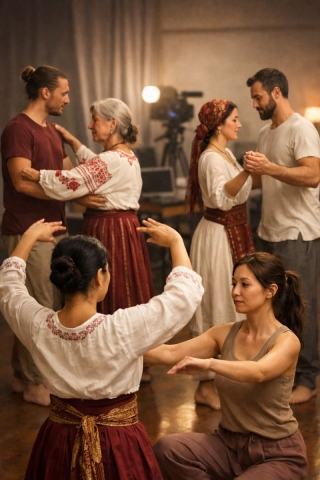
Today, historical dance traditions, have been shining in a globalized setting. Now, what with more and more mobility, media exposure, and digital platforms, the way dance is learned, transformed, or questioned has quite simply changed.
And while there are challenges involved in this change, there are those that offer optimal prospects for airs of both preservation, time, and confrontation over continents.
Documentation and Archiving
Modern technologies allow dance to be recorded and archived in ways previously impossible. Video documentation supports learning, comparison, and preservation of stylistic detail.
However, documentation cannot replace lived practice. Without active participation, archived dances risk becoming reference material rather than living traditions embedded in community life.
Education and Institutional Support
Schools, cultural organizations, and festivals play a growing role in sustaining historical dance traditions. Formal instruction can provide structure and continuity, especially where informal transmission has weakened.
Institutional support must balance standardization with respect for variation. When handled carefully, it can strengthen cultural expression rather than constrain it.
Community-Led Continuity
Despite institutional involvement, the survival of historical dance traditions ultimately depends on community engagement. Dances remain alive when people choose to practice them as part of social life, not only as heritage displays.
Community-led transmission ensures that dance continues to evolve in response to lived experience rather than external expectation.
Why Historical Dance Traditions Still Matter
Historical dance traditions offer insight into how societies understand themselves. They reveal values, conflicts, and relationships embedded in movement, providing a perspective on history that complements written records.
In a rapidly changing world, these traditions offer continuity without rigidity. They remind us that culture survives through adaptation, participation, and shared meaning.
A Living Record of Human Experience
The historical dance traditions have not emerged as mere relics from the past. They are records embodied by human bodies, formed within history, and then reformed over and over again by subsequent performers. For various cultural events, dances of ritual, social cooperation, and adaptation keep telling the story of who we were and who we are ready to be.
Closer examination will suggest that once we unravel the circumstances that brought these dances into existence, and how they managed to survive over time, another facet of human culture emerges: its gap for preserving itself expressed through the oral and material word and through the shared movement found in life.